
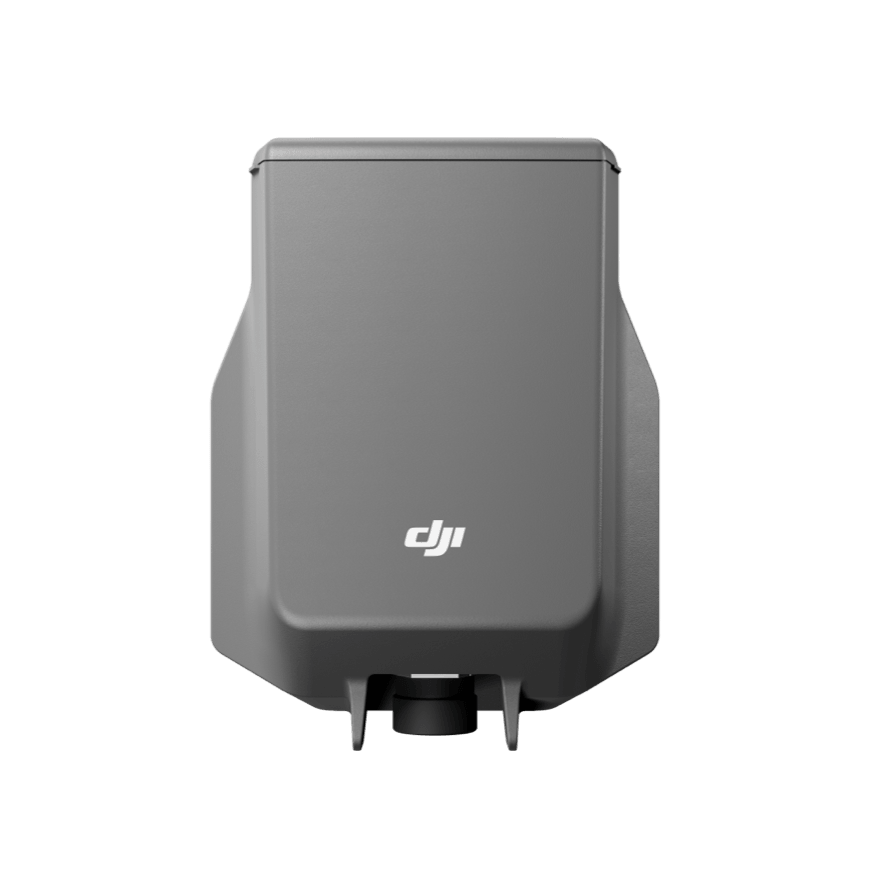
DJI AP100
Parachute
Parachute system for Matrice 400Additional safety in critical moments.
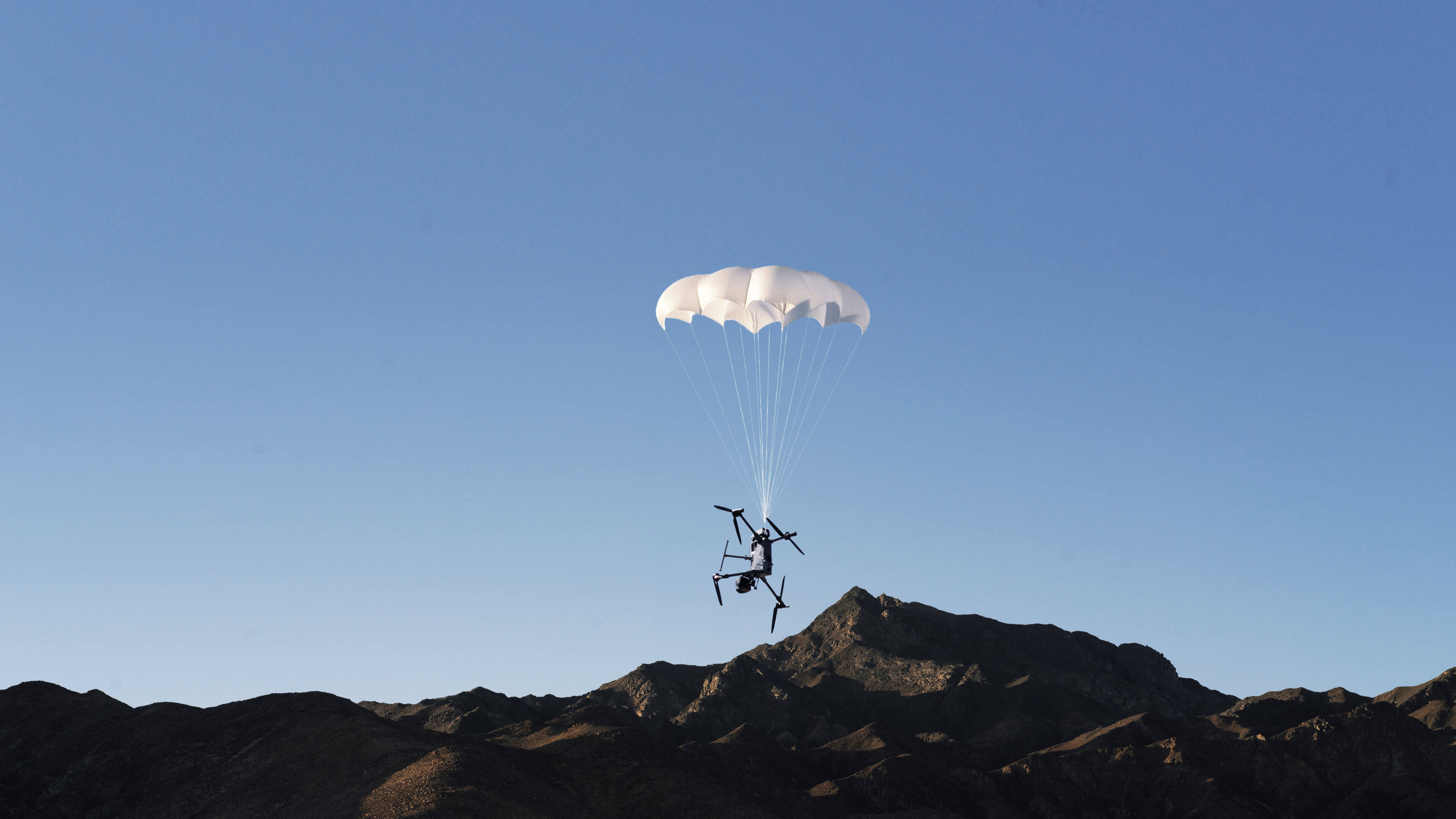
DJI AP100 is an independent emergency parachute system developed for Matrice 400. It helps reduce the aircraft's descent speed by deploying automatically when a critical flight anomaly is detected, or on pilot command when needed.
- System weightIncluding mounting bracket
- ≈935 g
- Automatic trigger responseNot the full inflation time¹
- ≤600 ms
- Stable descent speedUnder DJI test conditions²
- ≤5 m/s
- Protection ratingUnder the specified operating conditions
- IP55
¹ Measured from the FTS signal until confirmation that the rotors have stopped completely and electrical triggering of the gas generator. ² Effective minimum deployment height is ≥30 m; values depend on measurement conditions. See the specifications for details.
DESIGN AND INTEGRATION
Additional support for flight safety.
A more controlled
descent.
AP100 is designed to reduce Matrice 400's descent speed in an emergency. Independent flight control, sensors and power support help the parachute function in critical moments.
Maximum supported total takeoff weight is 15.8 kg. This is not payload capacity.
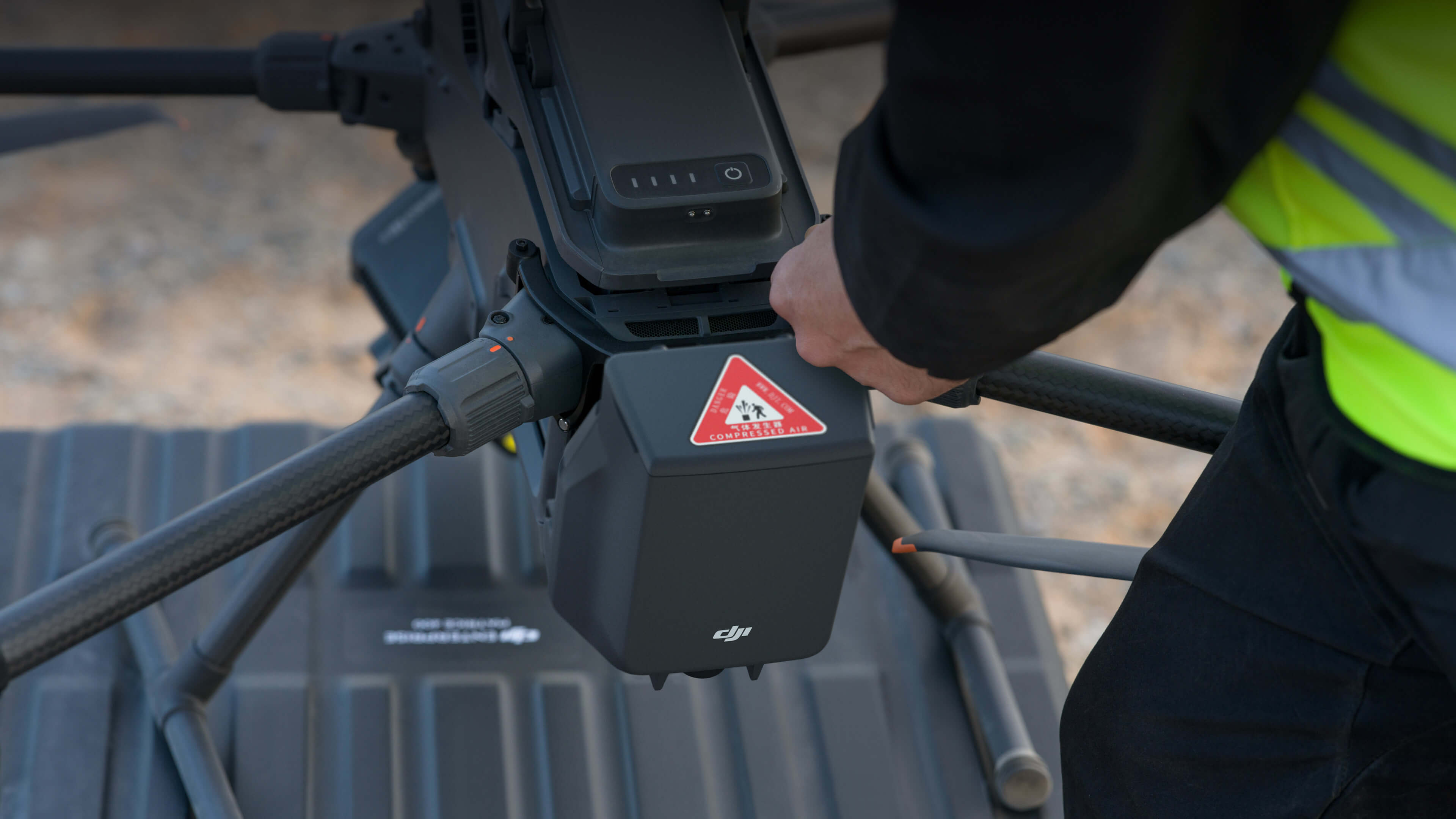
Fitted to the airframe.
Ready for transport.
The rear-mounted design facilitates battery replacement and payload use. Matrice 400 can be placed in its transport case with AP100 installed.
The approximate 935 g weight and 182 × 171 × 157 mm dimensions include the mounting bracket. Installation requires DJI's gimbal safety tether.
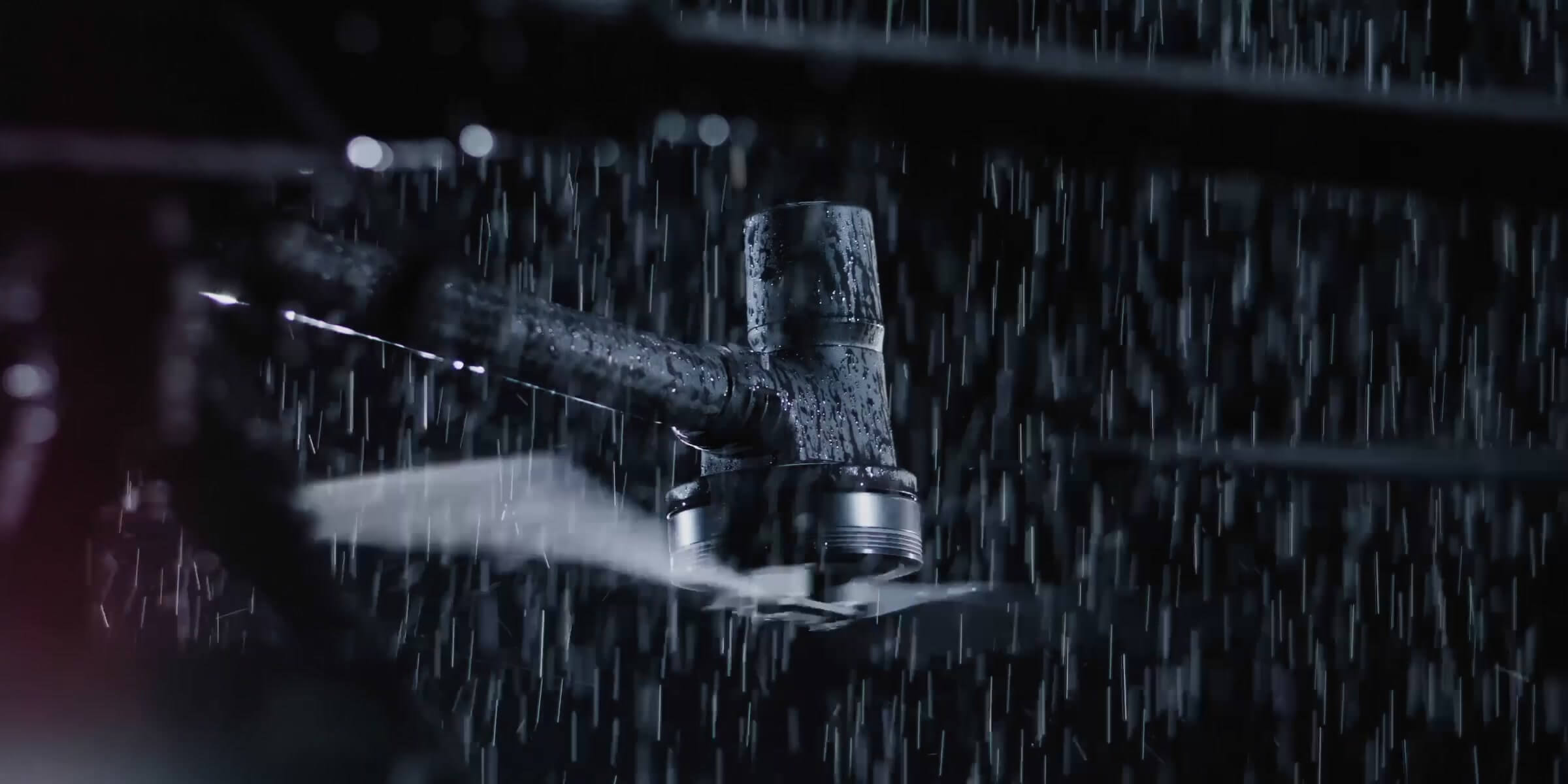
Adapt to
different conditions.
An IP55 rating and an operating temperature range of −20 °C to +50 °C support AP100 use in different field environments. The stated operating altitude is 0–4,500 m.
IP protection is not permanent and may decrease with wear. Refer to the user manual for environmental limits and maintenance requirements.
INDEPENDENT AND REDUNDANT SYSTEM
System monitoring at every stage.
Independent sensing
A separate flight-control system and IMU assess aircraft and parachute data together. Cross-validation helps reduce the likelihood of unintended triggering.
Continuous self-checks
The gas generator and communication links are monitored from startup to the end of flight. DJI Pilot 2 displays system status and relevant alerts through HMS.
Redundant power architecture
The dual-capacitor design provides approximately one hour of independent power when fully charged. Sensing and automatic-trigger support continue even if main power or the E-Port connection is lost.
Independent rotor shutdown
The flight termination system (FTS) ensures rotors stop before parachute deployment. Independent control and shutdown connections reduce the risk of parachute lines entangling the rotors.
Automatic and manual triggering
The system can deploy automatically by detecting abnormal tilt or descent speed. The pilot can trigger it manually using the on-screen slider in DJI Pilot 2.
Audible and light alerts
After deployment, audible and flashing-light alerts help locate the aircraft. Alerts last approximately one hour and can be stopped with the physical button.
CONTROL AND TRIGGERING
Monitor status. Deploy when needed.
View system status
before flight.
Self-check notifications in DJI Pilot 2 let you monitor parachute-system status. Perform installation and preflight checks according to DJI's user manual.
Pilot intervention
when needed.
The on-screen slider in DJI Pilot 2 allows manual parachute triggering during flight. Consider the vertical distance required for effective deployment and the system's activation conditions.
Distance required for effective deployment.
DJI specifies a minimum vertical height of 30 m for the parachute to reach a stable descent speed. At lower heights, launch may occur without sufficient inflation or deceleration.
Automatic triggering is disabled under certain conditions around the Home Point. Review the scope and test conditions in the tables below.
COMPATIBILITY AND USE
Designed for Matrice 400.
Mounting and sensing system
AP100 must be used with DJI's gimbal safety tether. This tether is incompatible with third-party payloads or brackets. Installing AP100 automatically disables the downward and rear mmWave radars, limiting small-obstacle detection in those directions.
Regional software support
Remote FTS through FlightHub 2 and Geocaging are available only in supported countries and regions. Türkiye is not included in the DJI support list checked for this page. This limitation must not be confused with manual triggering in DJI Pilot 2 or flight-anomaly detection.
AP100 is single-use; the entire system must be replaced after deployment. DJI recommends retiring the system three years after activation, even if self-check results remain normal.
TECHNICAL SPECIFICATIONS
Explore the details.
General and mechanical specifications
| Compatible aircraft | DJI Matrice 400 |
|---|---|
| Weight | Approx. 935 g, including mounting bracket |
| Dimensions (L × W × H) | 182 × 171 × 157 mm, including mounting bracket |
| Maximum supported total takeoff weight | 15.8 kg; total aircraft weight including all installed equipment |
| Parachute fabric | Nylon |
Deployment and descent performance
| Automatic trigger response time | ≤600 ms¹ |
|---|---|
| Stable descent speed | ≤5 m/s² |
| Effective minimum deployment height | ≥30 m³ |
| Trigger methods | Automatic anomaly detection; manual triggering through DJI Pilot 2 |
| Flight termination system (FTS) | Independent system that stops the rotors before parachute launch |
| Independent power support | Approx. 1 hour when fully charged⁴ |
| Post-deployment alerts | Approx. 1 hour of audible and light alerts; stopped with a button |
Environmental limits and integration
| Protection rating | IP55; protection may decrease with wear |
|---|---|
| Operating temperature | −20 °C to +50 °C |
| Operating altitude | 0–4,500 m |
| Effect on flight time | Approx. 6-minute reduction in DJI's reference test⁵ |
| Installation requirement | DJI's gimbal safety tether must be securely installed. The tether is incompatible with third-party payloads or brackets. |
| Millimetre-wave radars | Installing AP100 automatically disables Matrice 400's downward and rear mmWave radars. Small-obstacle detection is limited in those directions. |
| Software | Compatible software versions must be used for the aircraft, controller and DJI Pilot 2. |
Use, service life and regional features
| Pre-takeoff status | Automatic and manual deployment are unavailable while the aircraft is on the ground before takeoff. |
|---|---|
| Area where automatic triggering is disabled | Automatic triggering is disabled within a 10 m radius of the Home Point and a relative height range of ±15 m from it. DJI's stated condition for Cleaning Mode is within a 10 m radius of the Home Point and no more than 15 m above it. |
| Use after deployment | Single-use. The entire parachute system must be replaced after deployment. |
| Recommended replacement time | DJI recommends retiring the system three years after activation, even if self-check results remain normal. |
| FlightHub 2 and Geocaging | Remote FTS through FlightHub 2 and Geocaging are available only in supported countries/regions. Türkiye was not included in DJI's support list checked on 15 September 2026. |
| Remote FTS connectivity | In supported regions, the aircraft requires DJI Cellular Dongle 2 and 4G; the controller requires compatible 4G or Wi-Fi connectivity. |
| C5 / C6 configuration | DJI specifies a C5/UK5 configuration for Matrice 400 + AP100. C6/UK6 requires the dedicated DJI Matrice 400 (C6) Worry-Free Plus Combo; adding AP100 alone does not provide a C6 configuration. |
Measurement conditions and performance notes
| 1 · Response time | ≤600 ms; measured in a laboratory with the aircraft suspended and rotors turning, from the FTS signal until confirmation that the rotors have stopped completely and electrical triggering of the gas generator. This is not the parachute's full inflation time. |
|---|---|
| 2 · Descent speed | ≤5 m/s; measured in windless conditions at 25 °C, an altitude of 30–500 m and a Matrice 400 total takeoff weight of 15.8 kg. |
| 3 · Effective minimum height | ≥30 m; the minimum vertical distance required for the parachute to reach a stable descent speed. Test conditions: 25 °C, no wind, altitude below 500 m and total takeoff weight of 15.8 kg. Below 30 m, parachute launch may occur without full inflation or sufficient deceleration. |
| 4 · Power and alert duration | The approximate one-hour power and alert durations were measured at 25 °C with a factory-condition system or after flights longer than 30 minutes each month while attached to the aircraft. Actual duration depends on use and environmental conditions. |
| 5 · Flight-time effect | The approximate six-minute reduction was measured with Matrice 400 carrying H30T and AP100, at a total weight of 11,605 g, flying forward at a constant 10 m/s at sea level in windless conditions until forced landing. Actual results depend on conditions. |
AP100 is an additional emergency system; it does not eliminate the risk of damage or injury. Follow DJI's current manual for installation, preflight checks and use. Class labels and regional software support do not in themselves constitute operational permission.
Let Us Assess Your Fleet's Requirements.
Contact Atay Mühendislik for DJI AP100 compatibility with your Matrice 400 configuration, installation and product information.